
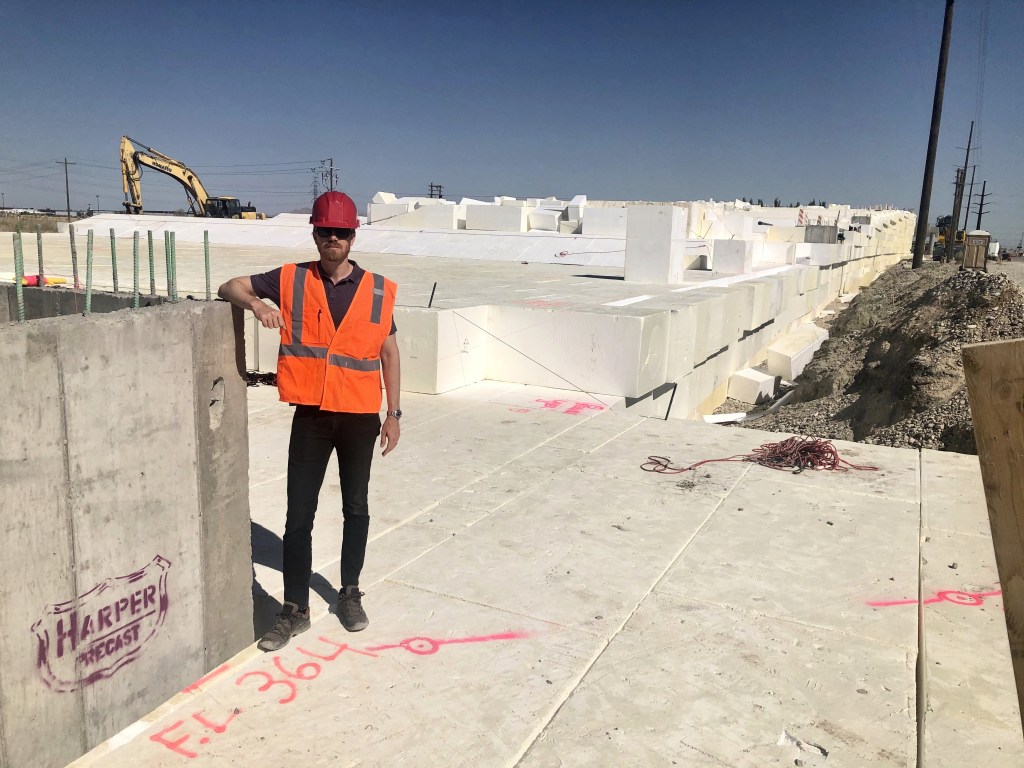
Are you considering using Geofoam but aren’t sure whether you can pour concrete over it?
Well, you have come to the right place for answers. In short, yes, you can pour concrete over Geofoam. It has been done on thousands of job sites around the world. In this blog, we will provide you with a basic education on how Geofoam works, the reasons it is used, and what considerations need to be made before pouring concrete topping over it.
What is Geofoam and Why is it Used in Construction?
EPS foam (Expanded Polystyrene) is a strong, lightweight material that is placed in the ground as Geofoam to fill in a vast array of differing applications on job sites. Geofoam doesn’t settle over time like traditional backfill materials, making it the ideal product for placement around foundations, retaining walls, and at unpredictable slopes. Engineers and builders love it because:
- It weighs less than gravel or soil, and that means reduced pressure on underlying soils, utilities, and adjacent structures.
- It is an excellent insulator.
- It delivers high compression strength and can support heavy loads without the risk of deformation.
So, Geofoam is an excellent material that can be used easily in construction projects.
Why Pour Concrete Over Geofoam?
So, why add concrete? Geofoam is not a one-trick pony. It is also an excellent underlayment for concrete! Common applications include:
- Bridge abutments and road embankments to prevent soil from shifting.
- Slab foundations for homes.
- Rooftop gardens and elevated concrete platforms to support structures without adding excessive weight.
Geofoam vs. Traditional Backfill: What’s the Difference?
So, what is the big difference between traditional backfill and geofoam? A few key things:
- Traditional soil or gravel backfill material is heavy and can settle over time, causing uneven surfaces.
- Geofoam is ultra-lightweight and can mean less stress on surrounding structures.
- It’s ideal for backfilling foundations and when you need to backfill a retaining wall without adding extra weight.
Common Myths About Geofoam and Concrete
What are some common myths about Geofoam and concrete?
Here are a few examples:
Myth: Geofoam Can’t Handle Heavy Loads
Fact: Geofoam is engineered precisely to withstand and support extremely heavy loads.
Myth: Concrete Will Crack Over Geofoam
Fact: When installed properly, Geofoam provides an excellent, uniform base for concrete, aiding in preventing cracking.
Myth: Geofoam Absorbs Water and Weakens Over Time
Fact: EPS foam does not degrade when exposed to moisture. It is water resistant due to its closed-cell composition, making it an excellent long-term solution for below-grade applications.
Should You Use Geofoam Under Concrete?
If you’re looking for a lightweight, durable alternative to traditional backfill material, geofoam is an excellent choice. It’s perfect for backfilling foundations, backfilling a retaining wall, and supporting concrete structures without adding unnecessary weight. Always consult professionals (like CMI Insulation!) to ensure you’re using the right geofoam for your project, though.
If you’re looking for help with your next Geofoam project, here at CMI Insulation, we proudly service the following areas:
- United States: Utah, Colorado, Arizona, New Mexico, Texas, Nevada, California, Oregon, Washington, Idaho, Montana, Wyoming
- Canada: British Columbia
So, in short, Geofoam is a lightweight, durable material that can be used with concrete.
