
Post Summary: Spray foam may seem like a high-performance insulation option for metal buildings, but it can create long-term risks that building owners often overlook. Because it bonds directly to metal panels, it may affect warranty coverage, trap hidden moisture and make future panel repairs far more disruptive. Traditional metal building insulation is often the safer long-term choice because it preserves serviceability, supports manufacturer requirements and helps protect the building system over time.
The Insulation Decision That Impacts Your Warranty
When you’re choosing metal building insulation, it’s easy to focus on one number. The R-value. Higher sounds better, so the decision should be simple, right? It doesn’t necessarily have to be that way.
Here’s what actually happens. Your insulation choice affects far more than temperature control. It plays a direct role in how your building performs over time and whether key protections stay intact. The insulation system you choose can impact panel warranties, corrosion resistance, future serviceability and even long-term resale value.
That’s where many building owners run into trouble. Not all insulation for metal buildings works with the way metal panel systems are engineered. And in many cases, spray foam can introduce risks in your metal building that aren’t obvious up front. Let’s take a closer look at why this is.
Why Spray Foam Raises Red Flags for Metal Building Manufacturers
To be clear, spray foam insulation isn’t inherently a bad product. It’s excellent for sealing irregular gaps and can deliver strong thermal performance. But metal buildings are different. This is a system compatibility issue, not a product quality issue.
1. Direct adhesion to panels
Spray foam adheres directly to the inside of metal panels, creating a permanent bond. While that might seem like added protection, it actually changes how the building system behaves. Metal panel systems are designed with airflow, drainage and access in mind. When foam is applied directly to the panel, air movement is restricted, moisture behavior changes and access to the panel is eliminated. Over time, these changes can create unintended consequences behind the surface where you can’t see them.
2. Moisture and corrosion risk
Moisture is the biggest long-term threat to any metal building. With spray foam insulation, if moisture finds its way behind the foam layer, it can become trapped against the metal surface. That’s when spray foam corrosion metal risks start to develop.
Instead of drying out naturally, moisture lingers. And because the foam hides the panel, corrosion can progress quietly for years before it’s detected. This is one of the most common “hidden costs”; damage that develops out of sight but leads to expensive repairs later.
3. Warranty language matters
This is where many owners start asking: does spray foam void warranty coverage? The answer depends on the manufacturer, but the risk is real. Many metal panel warranty insulation terms include exclusions for altering coated panel surfaces, bonding materials directly to panels and preventing inspection of the panel system.
Spray foam can check all three boxes. Manufacturers aren’t trying to make things difficult; they’re protecting themselves from conditions they can’t verify or control. If they can’t inspect the panel or if its performance has been altered, warranty claims may be denied.
The Serviceability Problem No One Talks About
One of the biggest differences between insulation systems doesn’t show up on Day 1. But it shows up years later. Traditional metal building insulation systems are designed to be serviceable. That means the building can be maintained without major disruption. With spray foam, that flexibility disappears.
What happens when you need to replace a roof panel?
Let’s say something goes wrong and eventually, something always does. You might be dealing with hail damage after a storm, a penetration error during equipment installation or corrosion that develops over time.
With traditional insulation, the fix is straightforward. The affected panel is removed and replaced, and the system continues to perform as intended.
With a spray foam metal building, the process is very different. Because the foam bonds everything together, repairs often involve cutting into the insulation, breaking adhesion points and rebuilding sections of the system. What should be a simple fix turns into a disruptive and expensive project. This is where insulation stops being just a material and becomes a long-term liability or asset.
How Spray Foam Can Complicate Manufacturer Relationships
Metal building systems come with long-term expectations. Manufacturers stand behind:
- Paint finish warranties that can last decades
- Corrosion protection systems
- Overall panel performance
When spray foam insulation changes the conditions those panels operate in, it creates uncertainty. If an issue arises, responsibility can become unclear. The manufacturer may point to altered conditions, while installers or contractors may see it differently. That leaves you, the building owner, in the middle.
Traditional metal building insulation avoids that problem by working within the system, not modifying it. It keeps everyone aligned from the start.
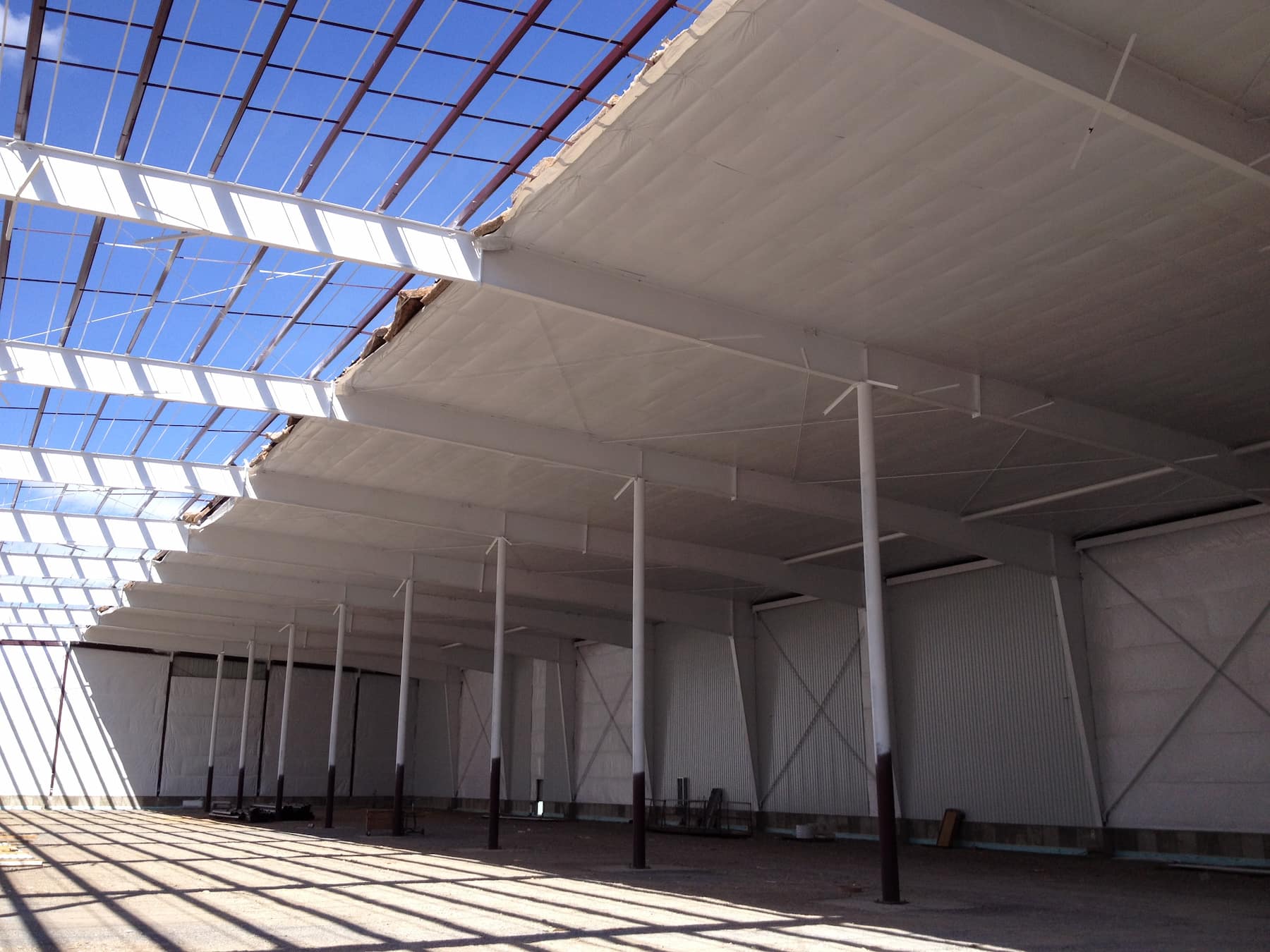
Why Traditional Metal Building Insulation Is the Safer Choice
If your goal is long-term performance and fewer surprises, traditional systems offer a more predictable path forward.
- Designed for metal building systems
Traditional insulation for metal buildings is engineered specifically for steel structures. It works with components like purlins and girts, maintains proper vapor control and allows the building to breathe where needed. Instead of fighting the system, it supports it.
- Preserves panel warranties
One of the biggest advantages is what it doesn’t do. Traditional systems don’t bond to the panel surface, which means coatings remain intact, panels stay accessible and the warranty conditions are preserved. There’s no guesswork and no need to interpret fine print later.
- Maintains serviceability
Over time, every building needs maintenance. The question is how difficult and expensive that maintenance becomes. With traditional insulation, panels can be removed and replaced without damaging surrounding areas. The repairs are contained and predictable, and overall downtime is minimized. That’s a major advantage for operational buildings where disruption costs money.
- Predictable long-term performance
A well-designed insulation system shouldn’t create uncertainty. Traditional metal building insulation avoids the hidden risks associated with foam, such as trapped moisture or unseen corrosion. What you see is what you get and what you can maintain over time. That predictability is what makes it a smart investment, not just a construction decision.
The Long-Term Cost Comparison (Not Just R-Value)
It’s easy to focus on installation costs. But insulation decisions should be evaluated over decades, not days.
| Factor | Spray Foam | Traditional Insulation |
| Initial Install | Often simple | Standardized |
| Warranty Risk | Potential conflicts | Typically aligned |
| Panel Replacement | Difficult | Straightforward |
| Long-Term Flexibility | Low | High |
| Manufacturer Alignment | Variable | Designed for it |
At first glance, spray foam insulation can look like the easier option. But over time, limitations in serviceability and potential warranty conflicts can quietly increase your costs. A system that aligns with your building from the start is often the more reliable financial decision.
Questions Every Building Owner Should Ask Before Choosing Spray Foam
Before committing to a spray foam metal building approach, it’s worth slowing down and asking a few key questions:
- Will this impact or limit my panel warranty?
- Can I replace a panel without major demolition?
- What happens if moisture gets behind the insulation?
- Can the manufacturer confirm warranty coverage in writing?
These are technical but also financial questions. The answers will shape your long-term costs and risks.
Final Thoughts: Protect the System, Not Just the R-Value
Metal buildings are engineered systems and every component plays a role in how they perform over time. Insulation should support that system, not alter it.
The right metal building insulation does more than regulate temperature. It protects your panels, preserves your warranty and helps maintain the long-term value of your property. When you step back and look at the full picture, the decision becomes clearer. The best solution isn’t just the one that performs today. It’s the one that continues to perform, year after year, without creating new problems behind the scenes. If you’re planning for the long term, that’s the kind of investment worth making.
FAQs – Frequently Asked Questions
Can you install spray foam in a metal building without affecting warranties?
In some cases, spray foam can be used without immediately voiding a warranty. But it depends entirely on the manufacturer’s terms. Many warranties include restrictions around bonding materials directly to panels or preventing inspection access. That’s why it’s critical to get written confirmation before installation. If there’s any uncertainty, choosing metal building insulation systems that are already aligned with manufacturer guidelines is the safer long-term approach.
What type of insulation do metal building manufacturers typically recommend?
Most manufacturers design their systems around traditional insulation for metal buildings, such as fiberglass systems with proper vapor barriers. These solutions maintain airflow, allow panel access and support long-term performance without altering the panel surface.
