
Post Summary: Metal buildings are naturally loud, hard surfaces reflect sound, thin panels carry vibrations, and large open spaces amplify every noise. The right insulation doesn’t just control temperature; it absorbs sound, dampens vibrations, and significantly reduces both interior echo and outside noise intrusion. This post covers why these buildings are noisy, which metal building insulation materials work best for sound control, and how even a basic upgrade can make your space dramatically quieter and more productive.
Your metal building may be strong, but it can also be surprisingly noisy. Every footstep, conversation or machine hum seems to echo endlessly, and thin metal panels make it easy for outside sounds to sneak in. This can make your space uncomfortable and less productive.
The solution? Proper insulation for your metal building. By adding the right layers of metal building insulation, you can absolutely absorb sound, reduce vibrations and keep both internal and external noise under control. Let’s talk more about it.
Why Metal Buildings Are Naturally Noisy
Metal buildings are naturally noisy because of the way sound behaves around metal. Hard surfaces reflect every noise, making footsteps, machinery or even voices echo across the space. Thin metal panels add to the problem, carrying vibrations from one side of the building to the other. Large, open areas only make it worse, amplifying every sound and creating constant reverb.
The right insulation for metal buildings can solve these issues. Why? Well, insulation absorbs sound and dampens vibrations, turning a loud, echo-filled structure into a quieter, more comfortable space.
Using insulation reduces noise while also improving comfort by helping control temperature and reducing energy costs. With the right metal building insulation, a space that once felt harsh and echoing becomes practical, productive and pleasant for everyone inside.
How to Reduce Noise in a Metal Building: Quick Wins
The easiest way to reduce noise in a metal building is by installing sound-absorbing insulation in the walls and ceilings. Fiberglass insulation is a good choice for noise reduction insulation, as it traps sound and dampens vibrations. Sealing gaps around doors and windows with acoustical sealant or door sweeps adds extra protection. Other steps, like adding acoustic panels, rugs or heavy curtains, can further soften echoes and create a quieter, more comfortable space.
How Insulation Works: The Science Behind Noise Control
Insulation works in two main ways to control noise in metal buildings: absorbing sound and blocking it. Sound absorption happens when things like fiberglass trap sound waves and reduce echoes inside the space. Sound blocking, or damping, comes from adding mass and density to walls and ceilings, which keeps noise from passing through the building.
Think of it like an empty gym versus a gym filled with mats, equipment and people. In the empty gym, every sound bounces off the walls, creating a loud, echoing space. Add insulation and the sound softens, the echo disappears and the space feels calmer and more comfortable.
It’s important to note that while higher R-value insulation improves thermal performance, it isn’t the main factor for noise control. The density and porosity of the material have a bigger impact on reducing echo and stopping sound from traveling through walls and ceilings. Using the right metal building insulation balances these factors for both comfort and acoustic performance.
Choosing the Best Insulation for Noise Reduction

Reducing noise in a metal building starts with understanding the type of noise causing the problem. Some materials help stop sound from passing through walls and roofs, while others focus on reducing echo and reverberation inside the space. For most metal buildings, echo control is the bigger challenge, which is why softer, sound-absorbing materials play such an important role in this process.
Fiberglass Insulation (Batts & Rolls)
Fiberglass insulation is one of the most effective options for reducing echo in metal buildings. Its soft, porous structure absorbs sound waves instead of reflecting them, helping control reverb in large, open spaces. CMI’s fiberglass insulation is designed specifically for metal buildings, offering reliable insulation for noise reduction while also improving temperature control and energy efficiency. This makes it a practical choice for warehouses, gyms, and general-purpose facilities.
Mineral Wool (Rockwool)
Mineral wool is dense and performs well at blocking lower-frequency sounds like machinery or traffic. While it can help reduce sound transfer, it is often used in targeted applications rather than as a primary solution for echo control inside large metal buildings.
Closed-Cell Spray Foam
Closed-cell spray foam is effective at limiting sound traveling through walls or roof panels. However, because it creates a hard, reflective surface, it does little to reduce echo inside the building. In spaces already struggling with noise buildup, spray foam alone can leave the interior feeling loud and harsh.
Insulated Metal Panels (IMPs)
Insulated metal panels also help reduce sound transfer through the building envelope. Like spray foam, their rigid surfaces reflect sound back into the space, which means they do not address the echo chamber effect common in metal buildings. They are best viewed as a structural or envelope solution rather than an interior noise-control strategy.
Acoustical Wall Treatments and Sound Panels
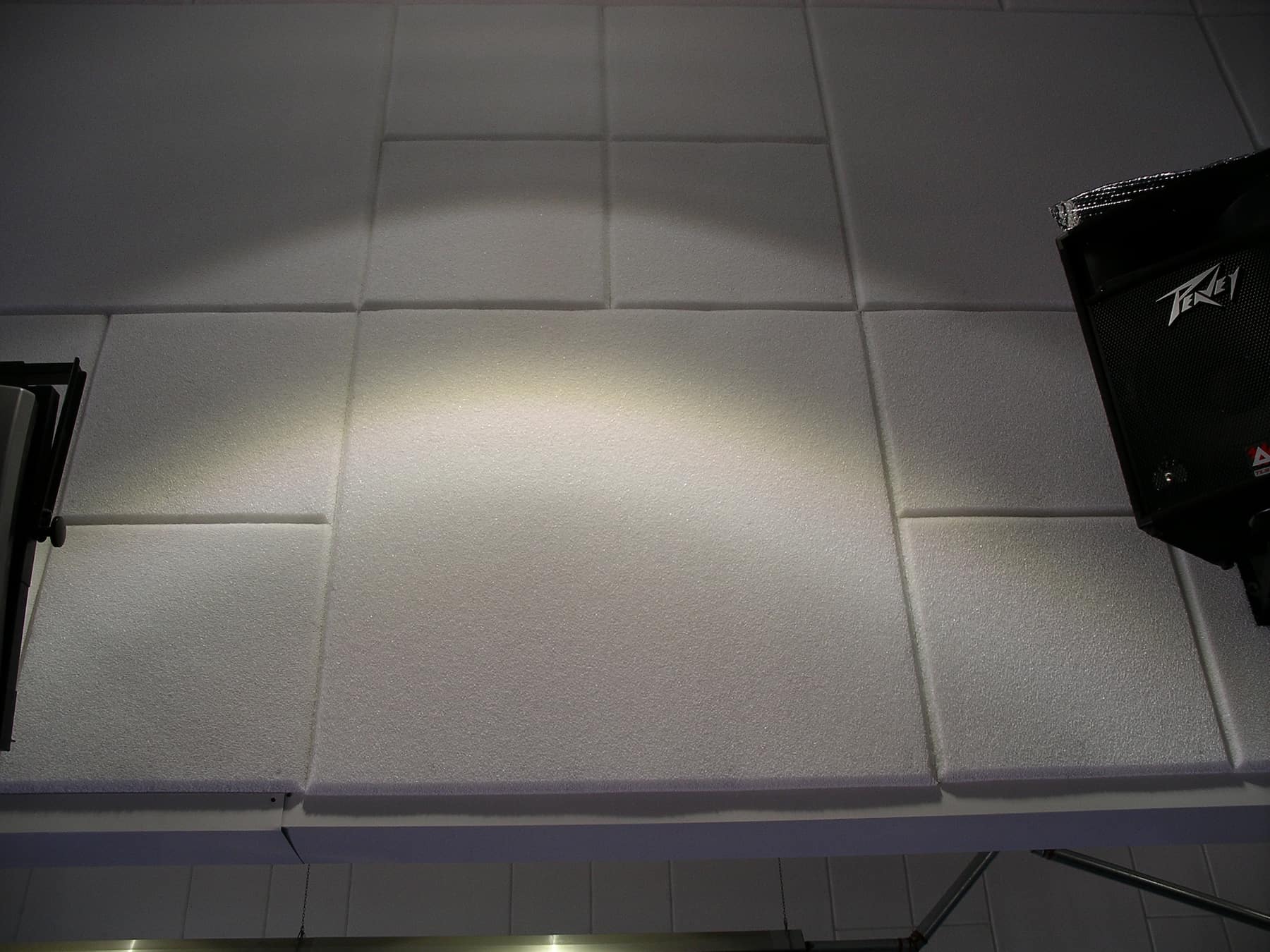
To truly quiet a metal building, soft interior treatments are often needed. Acoustical insulation, wall panels, and other sound-absorbing treatments reduce echo and improve sound clarity inside the space.
Using the right combination of insulation and acoustical treatments allows metal buildings to feel controlled and comfortable instead of loud and overwhelming. For most spaces, fiberglass insulation paired with targeted acoustical solutions provides the most noticeable improvement when it comes to noise reduction in your metal building.
Understanding Acoustic Ratings: STC & NRC
Understanding how insulation affects sound goes beyond just picking a material; acoustic ratings help show how well it performs. Two key ratings to know are STC and NRC.
STC, or Sound Transmission Class, measures how well walls, ceilings or panels block sound from passing through. A higher STC rating means more effective soundproofing, keeping outside noise out and inside noise from escaping.
NRC, or Noise Reduction Coefficient, shows how well a material absorbs sound within a room. Materials with a higher NRC reduce echo and reverberation, making a space feel quieter and more comfortable. CMI insulation also performs well in NRC ratings, softening sound in gyms, warehouses and event centers.
When choosing insulation for metal buildings, considering both STC and NRC ensures the product not only blocks outside noise but also improves the overall acoustic comfort inside. Using insulation with the right balance of absorption and blocking can make a noisy metal building feel calm, focused and practical.
Metal buildings are naturally noisy, with hard surfaces, thin panels and open spaces all contributing to echo and vibrations. The right insulation for metal buildings can change that. CMI’s products not only reduce noise but also improve temperature control and energy efficiency, creating a space that’s comfortable, functional and inviting.
Investing in quality insulation means turning a loud, echo-filled building into a quiet, productive environment. Assess your noise issues today and choose the right CMI insulation solution to make your metal building more comfortable, energy-efficient and acoustically balanced.
Frequently Asked Questions
Is it worth insulating a metal building?
Absolutely. Insulating a metal building improves acoustics, reducing echoes and unwanted noise. It also helps control temperature, lowers energy costs and prevents condensation, which can protect both the building and its contents. With the right insulation, a metal building becomes more comfortable, practical and long-lasting.
Do you need a vapor barrier when insulating a metal building?
Using a vapor barrier is highly recommended, especially in humid climates. It protects insulation from moisture, which can compromise both its thermal and acoustic performance.
