
Colorado Metal Building Insulation
The main drivers of Colorado’s economy are about as vast as its geography. While tourism, financial services, real estate, and aerospace are some of the state’s leading industries, however, manufacturing, agriculture, and energy are also important.
In terms of manufacturing, Colorado’s top sectors are for transportation, chemicals, fabricated metal, electrical equipment, and machinery. Colorado has a wide expanse of rich farmland that is ideal for producing wheat, cattle, dairy products, corn, and hay. The state’s abundance of natural resources has also led to a booming energy sector, including fossil fuels, natural gas, and even clean energy.
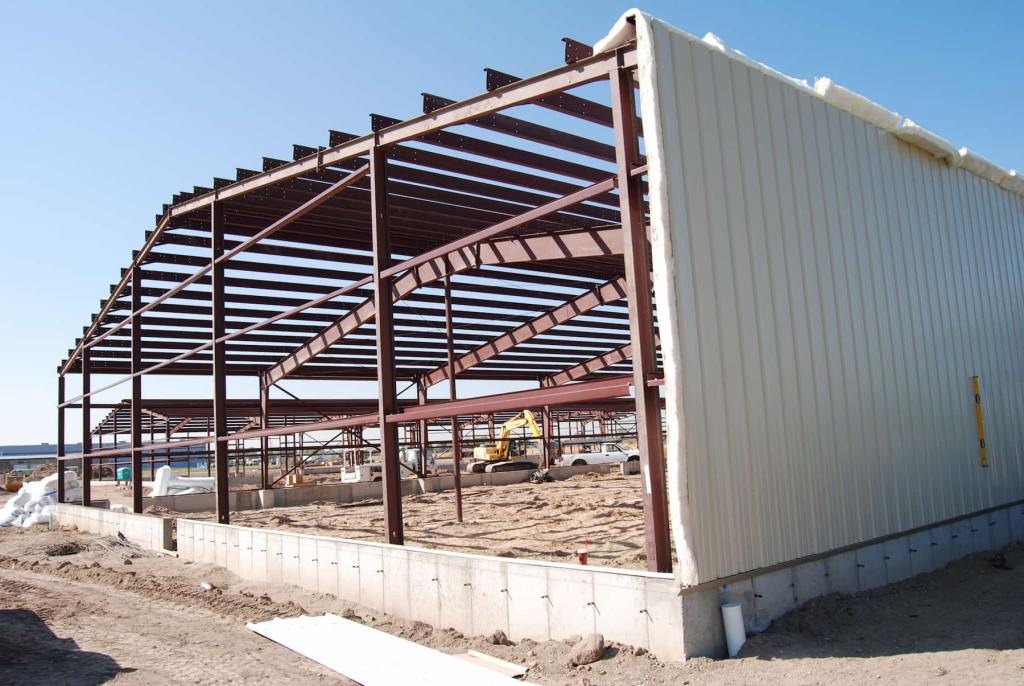
As Colorado’s industrial economic drivers continue to grow, so does the need for structures that support those sectors. Whether they are used to house entire manufacturing facilities or simply just as a warehouse for storage, metal buildings are efficient and affordable. And in a climate like Colorado’s where summers are moderate and winters are at or below freezing, it’s important to make sure metal buildings do their job in keeping temperatures regulated, no matter what the season. That’s where CMI Insulation can help.
Superior Products
At CMI Insulation, we have more than 35 years of experience with insulating pre-engineered metal buildings. As such, we know what it takes to create a great product that not only performs well, but is also affordable. Here are a few reasons why CMI Insulation for metal buildings is superior to others on the market:
- All of our materials are free of formaldehyde, so there’s no itching or health hazards associated with them.
- The white, laminated facing of our insulation provides for better lighting efficiency and overall better appearance.
- In addition to controlling heat flow, our insulation also prevents condensation and controls noise.
Easy Installation
In addition to the superior performance of our products, we’ve also designed them specifically to make sure that installing them as simple as possible. We do this by:
- Customizing each roll for your specific job measurements
- Color coding each roll for better organization on the job site
- Creating facing tabs that don’t require stapling
- Providing products to you that require little cutting on-site
Customer Testimonials
Very happy with my purchase here. I was lost as far as how to insulate my metal building. I almost pulled the trigger on just doing foam boards you buy Home Depot, but found this company through a colleague.
The price for their insulation was about the same as it would have been for the foam boards but the R-value was better and it was all custom-cut for my building.
Installing the batts was a learning process, especially for the roof. You can certainly do it as a one-man band, but it’s going to take some time and little tricks to make it work.
The insulation is very high quality, and I can absolutely tell a difference inside my shop!
– Jared Finch
I purchased insulation for my Barndominium in Malad ID, about 6 years ago and they provided me with a fantastic product that was made exactly to my specs. Swenson really took care of me. It is a bit of a drive but I was down there again last week #CustomerForLife.
– Rob Nelson
Frequently Asked Questions
- Order CMI’s retrofit faced fiberglass (e.g., R‑19) to fill the purlin cavity.
- Install it between structural members.
- Seal thoroughly: Colorado’s snowmelt/condensation cycles demand tight vapor barriers.
- Install interior finish as needed.
- Climate Zone 5 (Front Range): R‑38
- Zone 6 (mountain towns): R‑49 ceiling or R‑25 + R‑11 Liner System minimum.
- Zone 7 (higher elevation): R‑49+ or R‑30 + R‑11 LS under IECC 2015.
We proudly serve all states throughout the United States, including Arizona, California, Idaho, Montana, Nevada, North Dakota, South Dakota, Utah, and Wyoming, among others.
IF YOU HAVE QUESTIONS, FEEL FREE TO CONTACT US.
"*" indicates required fields
