
Metal Building Insulation Made right - the first time
Custom-cut, reinforced insulation systems for pole barns, steel buildings, warehouses, and agricultural structures that install fast, help lower energy costs and have better condensation control.
Request a Free Quote
Banner Form
"*" indicates required fields
BENEFITS OF METAL BUILDING INSULATION
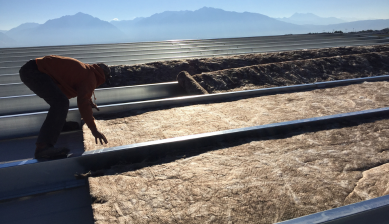
Controls Heat flow
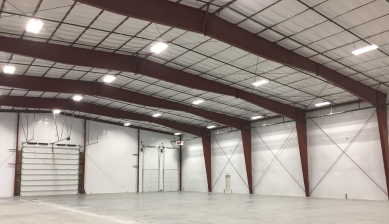
Prevents Condensation
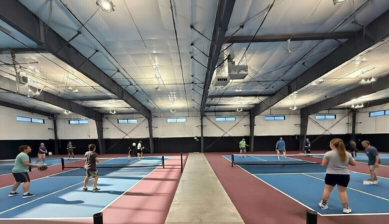
Controls Noise
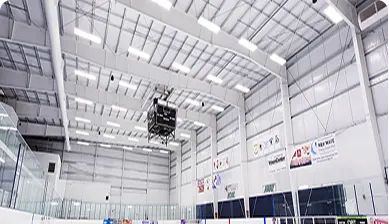
Increases Lighting Efficiency
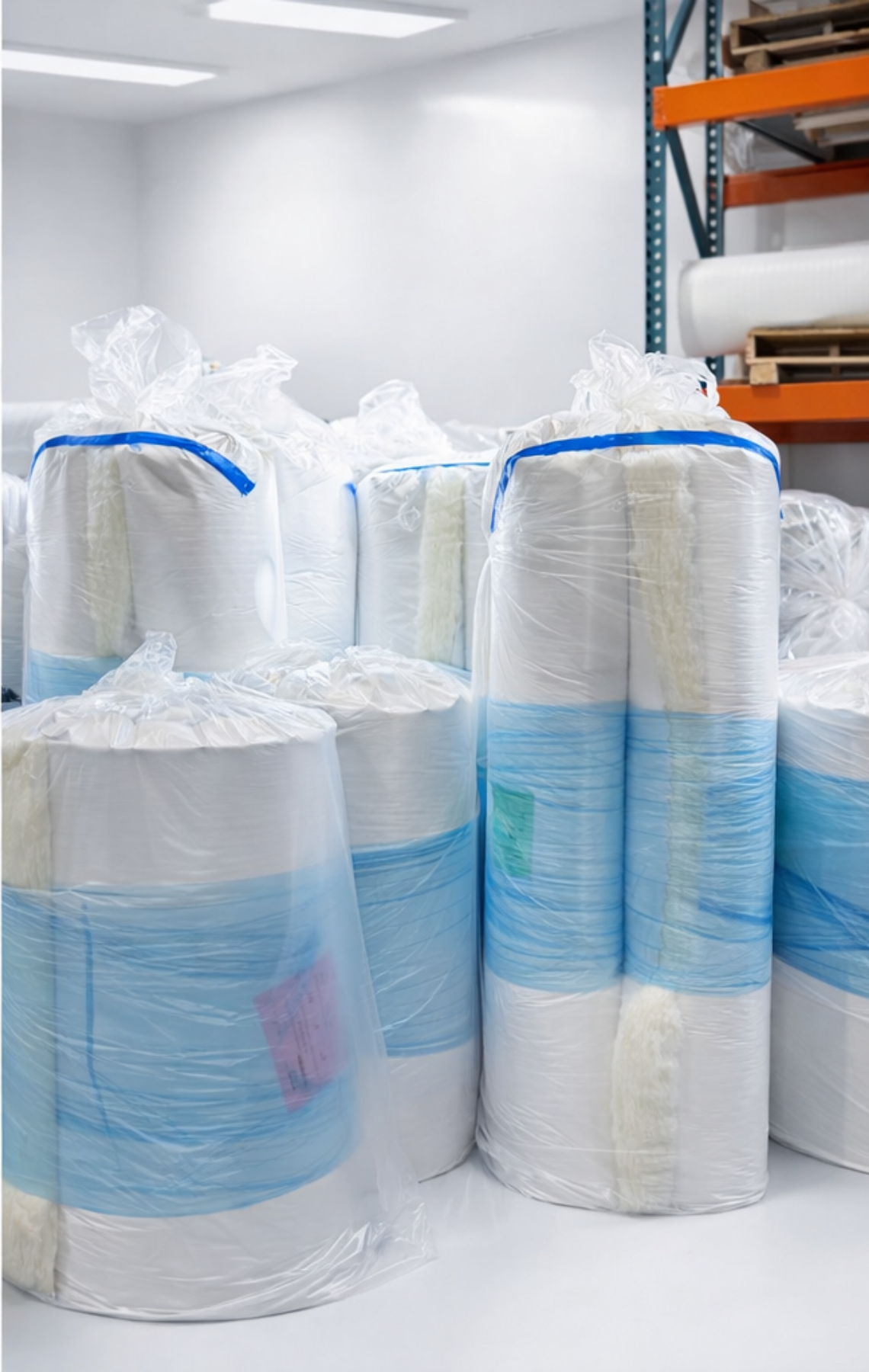
R-19 Heavy Duty Reinforced w/Batt (Per S.F.) – $.95 per sq ft
R-19 Heavy Duty Reinforced w/Batt (Rolls) – $190 ea (200 S.F. roll)
OUR METAL BUILDING INSULATION PRODUCTS & SYSTEMS
Our metal and steel building insulation combines durable reinforced facing with fiberglass insulation to manage temperature, reduce condensation, and improve comfort and energy performance inside steel structures.
Our products are the gold standard because:
- We only sell NAIMA 202-96 certified fiberglass
- They are faced with a better, stronger vapor barrier
- Each roll we make is custom-made for your specific job
- There is little job-site cutting
- They come in color-coded rolls for better job-site organization
- They have facing tabs that require NO STAPLING
- They include FREE COMCheck Energy Code Certifications
You can choose from standard reinforced facing w/ batt and heavy-duty reinforced facing w/ batt in many different thicknesses.
WHY CMI INSULATION?
OUR INSULATION IS TRUSTED BY BUILDERS ACROSS THE US
We are experts in combining the industry's best fiberglass with the best facings. Our standard faced fiberglass insulation product line for metal buildings includes 2” (R7), 3” (R10), 3½” (R11), 4” (R13), 6” (R19), 8” (R25), and 9” (R30). Higher R-values can be achieved by layering additional un-faced insulation on top of faced insulation of a lower R-Value. Our large varieties of reinforced vapor barriers are strong, attractive, and wrinkle free. Not only do our vapor barriers provide condensation control, but provide an overall attractive interior finish which also enhances light reflectivity.
Our most popular steel building insulation is “Formaldehyde Free” which makes it white in color, dust free, itch free, odor free, and incredibly user friendly. In fact, Johns Manville Fiberglass has been touted as the most user friendly blanket in the industry by professionals who install on a day to day basis. It is easy to install, will not rot or decompose, is fire resistant, and offers excellent sound control properties. Our various systems of installation allow the insulation for steel and metal buildings to be applied in single or multiple layers to give you the thermal performance you need. This type of faced insulation is most commonly installed over or within the structural frame of the metal building; inside the wall and roof sheets.
Manufactured to your exact building dimensions

Reinforced facings designed for metal structures

Stable R-value performance over time

Bulk and volume pricing

INSULATION
- THICKNESS
- 2" THICK
- 3" THICK
- 4" THICK
- 5" THICK
- 6" THICK
- 8" THICK
- 9" THICK
- PRICE RANGE / S.F.
- BATT
- R-7
- R-11
- R-13
- R-16
- R-19
- R-25
- R-30
- $.60 - $1.40
- FOAM BOARD
- R-13
- R-20
- R-27
- R-33
- R-40
- R-54
- R-60
- $2.63 - $11.88
- INSULATED PANELS
- R-13
- R-20
- R-27
- R-33
- R-40
- NA
- NA
- $10.00 - $30.00
- SPRAY FOAM
- R-13
- R-20
- R-27
- R-33
- R-40
- NA
- NA
- $3.00 - $9.00
BUILT FOR PERFORMANCE - NOT JUST R-VALUE
Selecting the right insulation for your project requires balancing thermal resistance with the physical constraints of your building's frame.
We provide a versatile range of formaldehyde-free fiberglass insulation products specifically engineered for metal and steel structures that help lower operating costs, make code compliance easy, are faster to install vs the competition.
Cost Calculator
- Roof: (Width + 2’) × Frame Length × Price per Sq. Ft.
- Sides: Height × Frame Length × 2
- Ends: Height × Width × 2
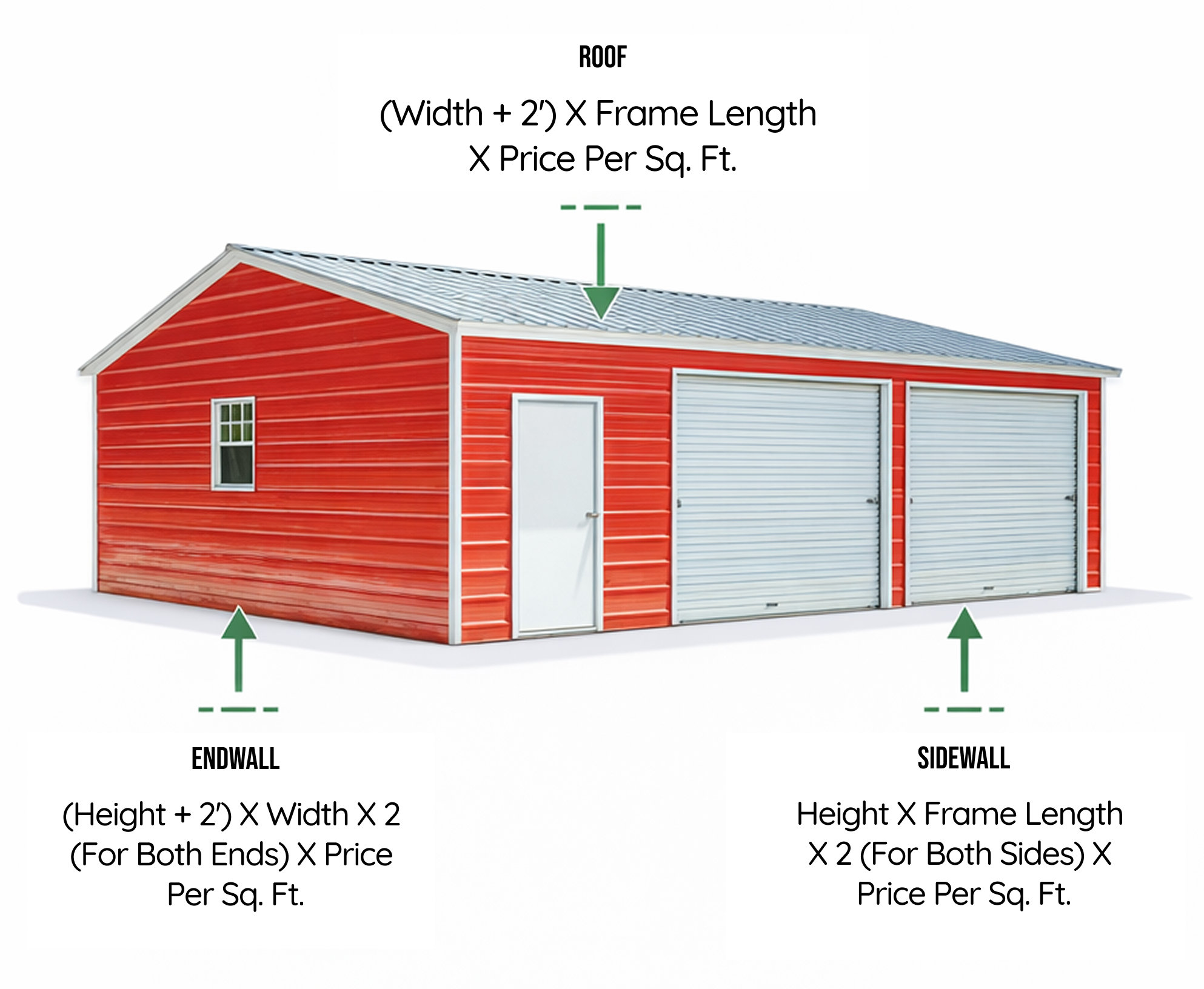
Roof
(Width + 2') x Frame Length x Price per Sq. Ft.
Add 2 feet to the width to cover the gables on a sloped roof, which increases the surface area compared to a flat roof.
Sides
Height x Frame Length x 2 (for both sides) x Price per Sq. Ft.
Multiply by 2 to account for insulating both sides of the building, ensuring full coverage and consistent protection.
FREQUENTLY ASKED QUESTIONS
What’s the difference between single-layer and double-layer insulation?
In metal building applications, the choice between single and double-layer insulation is primarily a balance between cost and thermal performance.
Single-layer insulation consists of a single fiberglass blanket compressed between the steel framing and the exterior panels; while economical, this compression at the purlins reduces the material’s effective R-value.
A double-layer system (often referred to as a “High R-Value” system) utilizes a base layer within the purlin cavity and a second perpendicular layer over the top.
This approach achieves superior energy efficiency, reaching ratings of R-30 or R-38, by maximizing the insulation’s true thickness and completely filling the wall or roof cavity to eliminate the air pockets that lead to condensation and heat loss.
Can your insulation help with condensation?
In metal building applications, properly installed fiberglass insulation is the primary defense against internal moisture and condensation.
Our insulation helps manage condensation by creating a thermal barrier that prevents warm, moist interior air from coming into contact with the cold metal exterior panels, which is where the dew point is typically reached.
By utilizing a high-quality, custom-laminated vapor retarder (facing) on the interior side of the insulation, our metal building insulation systems effectively block water vapor from migrating into the wall or roof cavity.
When installed as a double-layer system, the insulation fills the entire purlin depth, eliminating the stagnant air pockets where moisture often collects and ensuring that the metal building remains dry, protecting both the structural steel and the contents within from rust and mold.
Do you offer custom lengths or facings?
Yes, custom sizing and specialized facings are actually the core of what CMI Insulation offers our clients.
Unlike “off-the-shelf” insulation that requires significant on-site cutting, we custom-manufacture every order to the specific dimensions and aesthetic needs of your building.
By laminating the fiberglass and vapor barrier in-house, we ensure that each roll arrives ready for immediate installation, which significantly reduces labor costs and material waste
What R-value do I need for my climate?
In metal building applications, the R-value required for your project is primarily determined by local energy codes and the specific climate zone of your job site.
We recommend tailoring your insulation thickness based on the International Energy Conservation Code (IECC), which divides the US into distinct zones to account for heating and cooling demands.
For instance, projects in Climate Zone 3 (e.g., Dallas, TX) often require a minimum of R-13 to R-19 in walls to combat heat gain, while those in Climate Zone 5 (e.g., Sandy, UT) typically move toward R-25 or R-30 systems to retain heat during snowy winters.
For extreme northern environments like Climate Zone 7 (e.g., Duluth, MN), a double-layer R-38 system is often the standard to prevent thermal bridging and significant energy loss in sub-zero temperatures.
How fast can you ship?
Because we custom-cut and laminate our products at our own facility, we offer a significantly faster turnaround than many national distributors.
While timelines can vary based on seasonal demand and order complexity, our standard process is designed to get material to your job site within about a week.
How do I calculate how much insulation I need?
In metal building applications, calculating insulation is based on the total surface area of your roof and walls, plus an “overage” factor to account for the thickness of the steel and the overlap at the seams.
Because we custom-cuts rolls to length, the most accurate calculation is done by measuring the length of your purlin or girt runs rather than just total square footage.
This ensures that each roll spans the entire distance of your bay without unnecessary splices.
Generally, you will calculate the Roof Area (considering the pitch/slope) and the Wall Area (subtracting large openings like overhead doors), then add a 5-10% buffer to account for the “stretch” required to wrap over purlins and for trimming at the eaves and base.
Ready to Insulate Your Metal Building?
We proudly supply insulation for steel and metal buildings to all states throughout the United States, including Arizona, California, Colorado, Idaho, Montana, Nevada, North Dakota, South Dakota, Utah, and Wyoming, among others. Please request a quote by clicking on the button below.


Insulation Systems
Products
Contact
- Toll Free: 888-889-8907
- Direct: 801-352-9800
- Fax: 801-433-9300
- 9390 South 300 West Sandy, UT 84070
