
Post Summary: If your metal building is still too hot in summer and too cold in winter even with insulation installed, the problem is usually not the insulation alone. Common causes include thermal bridging through the steel frame, air leaks, wet or compressed insulation, torn vapor barriers, and sagging fiberglass that leaves hidden gaps. A proper fix starts with diagnosing where the building envelope is failing, then improving air sealing, vapor barrier continuity, thermal breaks, and retrofit insulation support where needed.
Does your metal building feel like an oven in July and an icebox in January, even after you’ve already paid to insulate it? You’re not imagining things and you’re not alone. If your metal building insulation is not working the way it should, the insulation itself is rarely the whole story. The real culprits are usually hiding in places most people never think to check. Here’s what’s actually going on, and what you can do about it.
How to Keep a Metal Building Warm
Fiberglass batt insulation is an affordable, effective option for metal buildings, garages and workshops. It provides good thermal performance but requires a vapor barrier and proper installation to prevent gaps. Beyond the insulation itself, keeping a metal building warm depends on sealing every air gap at doors, windows, eaves and penetrations, because even a small opening can drain conditioned air faster than your heating system can replace it.
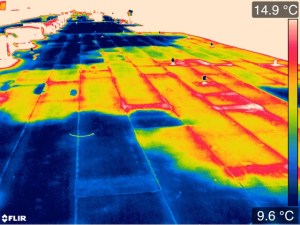
The Real Reason Your Metal Building Has Temperature Problems
Metal is one of the most thermally conductive materials used in construction. Steel conducts heat roughly 300 to 400 times faster than wood, according to the U.S. Department of Energy. That means metal building temperature problems are baked into the material itself and insulation alone doesn’t automatically compensate for that.
Understanding where your system is failing starts with knowing the four most common breakdowns.
- Thermal Bridging: The Problem Inside Your Frame
This is the one most building owners never hear about until it’s costing them serious money. Thermal bridging in a metal building happens when the steel frame (the purlins, girts and columns) conducts heat directly through the wall or roof assembly, bypassing the insulation entirely. Your batts might be rated R-19, but if the steel frame is running heat straight through every few feet, your metal building’s effective R-value is a fraction of what’s printed on the label.
The metal building thermal bridging solution is a thermal break. A layer of continuous rigid insulation or thermal break tape placed between the steel frame and the panel. This interrupts the conductive pathway and allows your insulation to perform closer to its rated value. CMI’s High R-Value Banded System is specifically engineered to address this, delivering genuine thermal performance rather than just label R-values.
- Air Leaks: The Bucket with a Hole
Think of your building envelope as a bucket. Insulation is the bucket wall. Air leaks are holes in the bottom. No matter how much you fill it, metal building air leaks will drain conditioned air faster than any HVAC system can compensate. Poorly sealed seams, gaps around penetrations and deteriorated door gaskets all bypass your insulation entirely, making your metal building too cold even with insulation in winter and insufferably hot in summer.
The fix is systematic air sealing before or alongside any insulation upgrade. Insulation repair tape handles minor tears and punctures in existing systems. For larger gaps, spray foam works well at irregular penetrations before your primary insulation system goes in.
- Condensation and Wet Insulation
Here’s what actually happens when warm, humid interior air hits your cold metal panels. It condenses. That moisture saturates your insulation and wet fiberglass can lose up to 40% of its rated R-value. So even if your metal building insulation R-value looked good on paper at installation, years of moisture infiltration may have quietly gutted its performance. The result is a building that feels freezing in winter and breeds rust from the inside out.
The non-negotiable fix is a properly installed, fully continuous vapor barrier facing. A single tear or gap is enough to let moisture in.
- Sagging Insulation and Hidden Gaps
Gravity and moisture are slow, patient enemies. Traditional fiberglass blankets installed without proper support systems will sag over time, pulling away from the roof deck and wall panels and leaving large uninsulated pockets exactly where heat transfer is worst. If your metal building is too hot even with insulation, look up. A sagging roof blanket that’s dropped even a few inches away from the panel has essentially stopped working in that zone.
Retrofit strapping systems restore contact and compression. For buildings where sagging is already advanced, a full retrofit insulation system can be installed over existing insulation without removing exterior panels or interrupting operations.
What Does It Cost to Fix?
For a standard 30×40 metal building (approximately 2,600-3,000 sq. ft. of total coverage including walls and roof), here’s a realistic cost range:
Fiberglass blanket systems run $1,500-$2,500 installed. Reflective radiant barriers add another $1,500-$2,500. Spray foam, which works well for sealing irregular gaps but requires professional application, runs $3,500-$13,500 or more depending on thickness and scope. DIY labor rates typically run $0.50-$1.25 per square foot, while professional installation adds $1.00-$2.00 per square foot on top of materials.
For existing buildings, a retrofit approach almost always costs less than a tear-out and delivers comparable performance improvement, often without any downtime at all.
Your 3-Step Diagnostic Checklist
You keep asking yourself: “Why is my metal building so cold in winter and so hot in summer?” We’ve got you covered. Because if your metal building insulation is not working, start here before spending anything:
- Inspect for air leaks at every seam, penetration, door frame and eave. Run your hand along the perimeter on a windy day; you’ll feel exactly where conditioned air is escaping.
- Check your vapor barrier for tears, gaps or compression damage. Any breach is a moisture pathway.
- Look for thermal bridging at your steel frame. If your purlins and girts are unprotected, your real-world R-value is significantly lower than your installed R-value.
You don’t have to settle for a building that can’t maintain a comfortable temperature. If you’d like a professional assessment of what’s driving your metal building’s temperature problems, contact our CMI team or explore our retrofit insulation systems to see what a proper building.
FAQs – Frequently Asked Questions
Why is my metal building so hot even with insulation installed?
If your metal building is too hot even with insulation, the most likely causes are thermal bridging through the steel frame, a missing or undersized radiant barrier and air leaks bypassing the insulation at seams and penetrations. Insulation alone can’t overcome all three of those without being part of a complete thermal envelope strategy.
What is thermal bridging and why does it matter in metal buildings?
Thermal bridging in a metal building occurs when the steel structural frame conducts heat directly through the wall or roof assembly, bypassing the insulation. Because steel conducts heat so efficiently, this can dramatically reduce your building’s effective R-value even when the insulation itself is correctly installed.
What are the most common problems with metal building insulation?
The most common issues are sagging fiberglass batts creating uninsulated gaps, vapor barriers with tears that allow moisture infiltration, air leaks at seams and penetrations and thermal bridging at the steel frame. Any one of these can make your metal building insulation feel like it’s not working even when it was correctly specified.
How much does it cost to insulate a 30×40 metal building?
Total installed costs typically range from $1,500 for basic fiberglass systems up to $13,500 or more for closed-cell spray foam, depending on material choice and whether you’re doing new construction or a retrofit. For most existing buildings, a retrofit fiberglass system in the $1,500-$4,000 range delivers the best balance of performance improvement and cost.
